Kibble vs Fresh Dog Food — An Honest Look at the Trade-Offs


Kibble vs Fresh Dog Food — An Honest Look at the Trade-Offs
Dog owners today face more feeding options than ever before. Kibble remains the most widely used format worldwide, while fresh food has grown rapidly as processing methods and nutritional research evolve.
The discussion is often framed emotionally — but nutrition works best when discussed structurally.
The useful question is not which camp is “right.”
The useful question is:
What was each feeding model designed to optimize — and what trade-offs come with that design?
Understanding that difference allows feeding decisions to be based on biology and purpose rather than marketing language.
What Kibble Was Designed to Solve
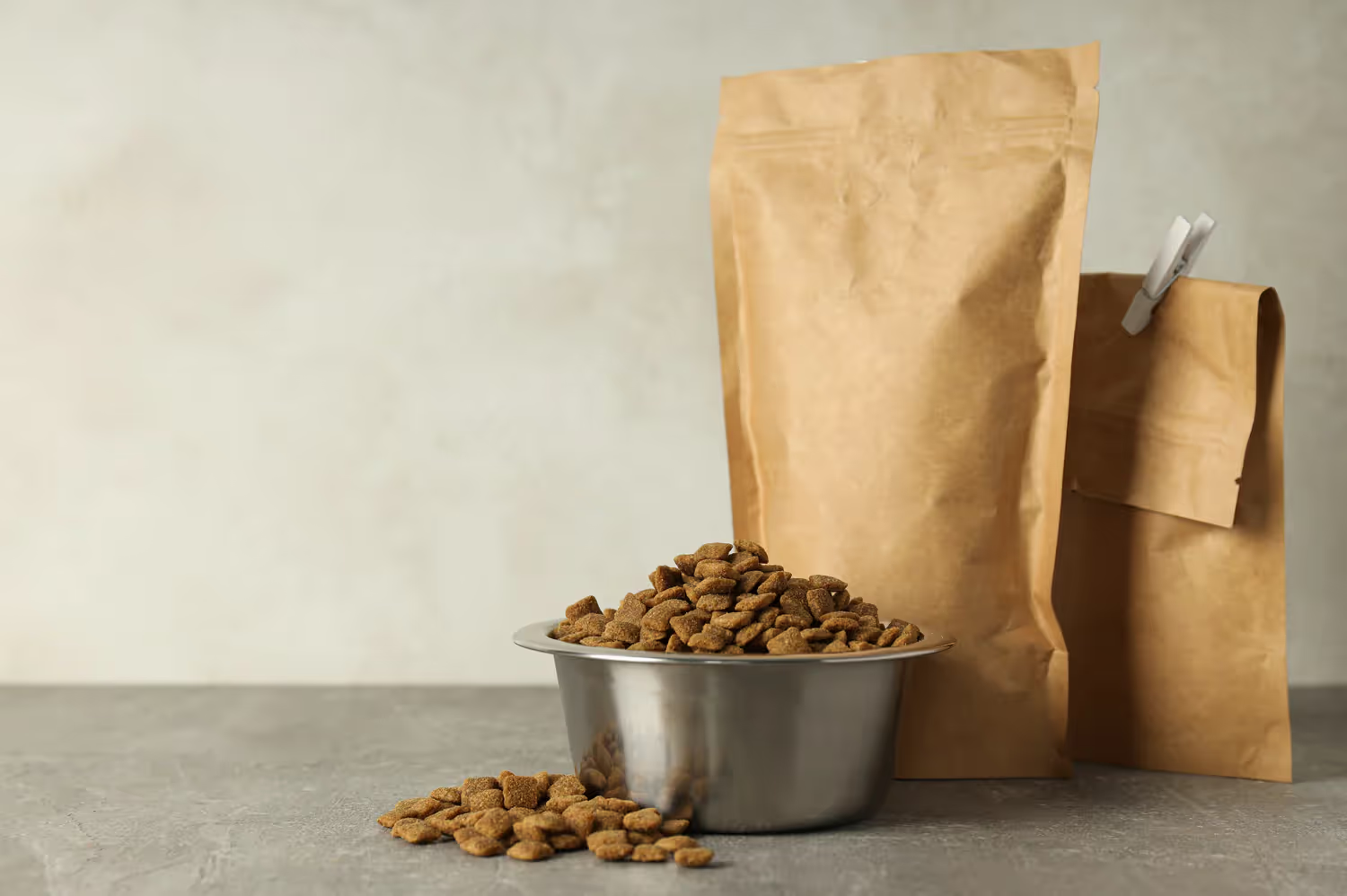
Kibble is a product of nutritional engineering and industrial food science. It was developed to solve practical problems at scale:
- Shelf stability without refrigeration
- Predictable nutrient composition
- Efficient mass production
- Affordable cost per calorie
- Storage and transport simplicity
Most kibble is produced using high-heat extrusion, where mixed ingredients are cooked under heat and pressure, shaped, dried, and then fortified with vitamins and minerals to meet nutritional standards.
From a systems perspective, kibble is optimized for:
- Consistency
- Safety
- Accessibility
- Regulatory completeness
Those are real strengths — and they explain why kibble remains widely used.
But those strengths are not the same as optimizing for digestive efficiency or nutrient bioavailability.
Processing Intensity Changes Nutrient Behavior
Heat is not inherently harmful — cooking improves safety and digestibility in many contexts. But temperature level and duration significantly change how nutrients behave.
High-temperature processing can:
- Aggressively denature proteins
- Increase fat oxidation
- Reduce certain heat-sensitive vitamins
- Remove intrinsic moisture
- Increase formation of heat-derived compounds such as advanced glycation end products (AGEs)
After intensive processing, nutrients are often added back in measured amounts to meet standards. This preserves labeled completeness — but it does not fully recreate original food structure.
Nutrition labels measure quantity.
Digestion depends on structure.
That distinction is biologically meaningful.
Digestibility vs Nutrient Presence
A nutrient listed is not the same as a nutrient absorbed.
Digestibility measures how much of a nutrient is actually broken down and utilized by the body. Controlled feeding research in animal nutrition has repeatedly shown that gently cooked, minimally processed diets often demonstrate higher apparent digestibility for protein and fat compared with heavily extruded dry foods.
This difference is tied to:
- Protein structure accessibility
- Moisture content
- Oxidation state of fats
- Degree of matrix breakdown during cooking
Digestibility is not a marketing term — it is a measurable physiological outcome.
What Academic Research Has Observed About Minimally Processed Diets
Longitudinal feeding research conducted at the Cornell University College of Veterinary Medicine has examined how minimally processed, gently cooked diets influence metabolic markers in dogs over time.
In controlled study settings, researchers observed measurable shifts in circulating metabolic compounds associated with healthier aging patterns, including lower levels of advanced glycation end products (AGEs), which are linked in multiple species to oxidative stress and chronic inflammatory burden when elevated.
This type of metabolomic research is important because it measures:
- Systemic biological response
- Metabolic pathway changes
- Processing impact — not just ingredient lists
These findings do not claim that one format universally outperforms another in every context. They do demonstrate that processing level influences metabolic outcomes, which is a meaningful scientific distinction.
Moisture Is a Nutritional Variable — Not Just a Texture Difference
One major difference between dry kibble and fresh food is water content.
Typical dry food: ~8–10% moisture
Typical fresh food: ~65–75% moisture
This affects:
- Gastric processing
- Enzyme activity
- Stool hydration
- Total water intake
- Urinary dilution
Controlled feeding observations show that dogs consuming moisture-rich diets often achieve higher total hydration even when drinking less separately.
Hydration from food is physiologically functional — not cosmetic.
Where Prescription Therapeutic Diets Fit
Prescription diets are a distinct category from everyday kibble and fresh maintenance diets.
They are formulated as clinical nutrition tools intended to help manage diagnosed medical conditions such as:
- Kidney disease
- Urinary stone risk
- Gastrointestinal disorders
- Severe food sensitivities
- Obesity treatment plans
Their objective is not general nutrition optimization.
Their objective is disease-state management.
They achieve this by tightly controlling:
- Mineral levels
- Protein load
- Fiber structure
- Fat content
- Digestibility targets
These diets are supported by clinical outcome research and are widely used in veterinary medicine. Much of this research is industry-funded — a practical reality given the cost of long-term feeding trials — but still clinically relevant.
Prescription diets answer a specific question:
How do we manage a diagnosed condition safely and predictably?
That is a different objective from long-term nutrition design for healthy dogs.
Different objective → different formulation logic.
What Fresh, Gently Cooked Diets Are Designed to Optimize
Fresh, gently cooked feeding models generally optimize for:
- Lower processing intensity
- Higher moisture retention
- Preserved nutrient structure
- Digestive accessibility
- Ingredient transparency
When properly formulated, fresh diets aim to support:
- Nutrient bioavailability
- Digestive efficiency
- Hydration support
- Ingredient integrity
Fresh food is not automatically superior by definition. Formulation quality, nutrient balance, and cooking control remain essential.
Processing method helps — it does not replace nutritional design.
Nutrition Quality and Downstream Health Costs
Many owners ask whether higher-quality nutrition affects long-term health expenses. This is an important question — and it deserves a precise answer.
No feeding format can guarantee freedom from illness. Health outcomes depend on genetics, environment, activity, preventive care, and many other variables.
What nutrition influences is physiological baseline condition.
Well-formulated, digestible diets that support healthy weight, metabolic stability, and gastrointestinal function are associated — in both veterinary and human nutrition science — with:
- Better metabolic markers
- Healthier body composition
- Improved glycemic control
- Lower inflammatory burden
- More stable digestion
These baseline factors are known contributors to disease risk profiles.
In practical terms, nutrition supports:
- Healthy weight maintenance
- Digestive stability
- Skin and coat quality
- Energy regulation
- Metabolic resilience
Over time, stronger physiological baselines may reduce the likelihood of nutrition-linked complications — which can influence how often medical intervention is required.
Nutrition is not a substitute for veterinary care.
It is a foundation layer that supports it.
Where The Wolfery Company Positions Its Approach
The Wolfery Company approaches fresh feeding as a precision nutrition system, not a trend.
The focus is on:
- Gentle cooking instead of aggressive processing
- Digestibility over marketing metrics
- Moisture and structure preservation
- Portioning guided by physiology
- Culinary technique applied to nutritional goals
The goal is not to oppose existing feeding models.
The goal is to advance everyday nutrition for healthy dogs using improved processing control and formulation discipline.
The Question That Actually Matters
The most useful question is not:
- Is kibble bad?
- Is fresh food better?
- Are therapeutic diets overused?
The useful question is:
What feeding method best supports my dog’s digestion, metabolic stability, and long-term resilience — given their health status and needs?
Different tools serve different purposes.
Real nutrition is contextual — not ideological.
"Minimally processed, gently cooked diets are supported by research as more digestible and metabolically favorable in several measurable ways compared with heavily processed diets — but overall health outcomes depend on formulation quality, individual biology, and clinical context." - Chef Joseph
Written by Chef Joseph Ruby, Founder & Chef of The Wolfery Company