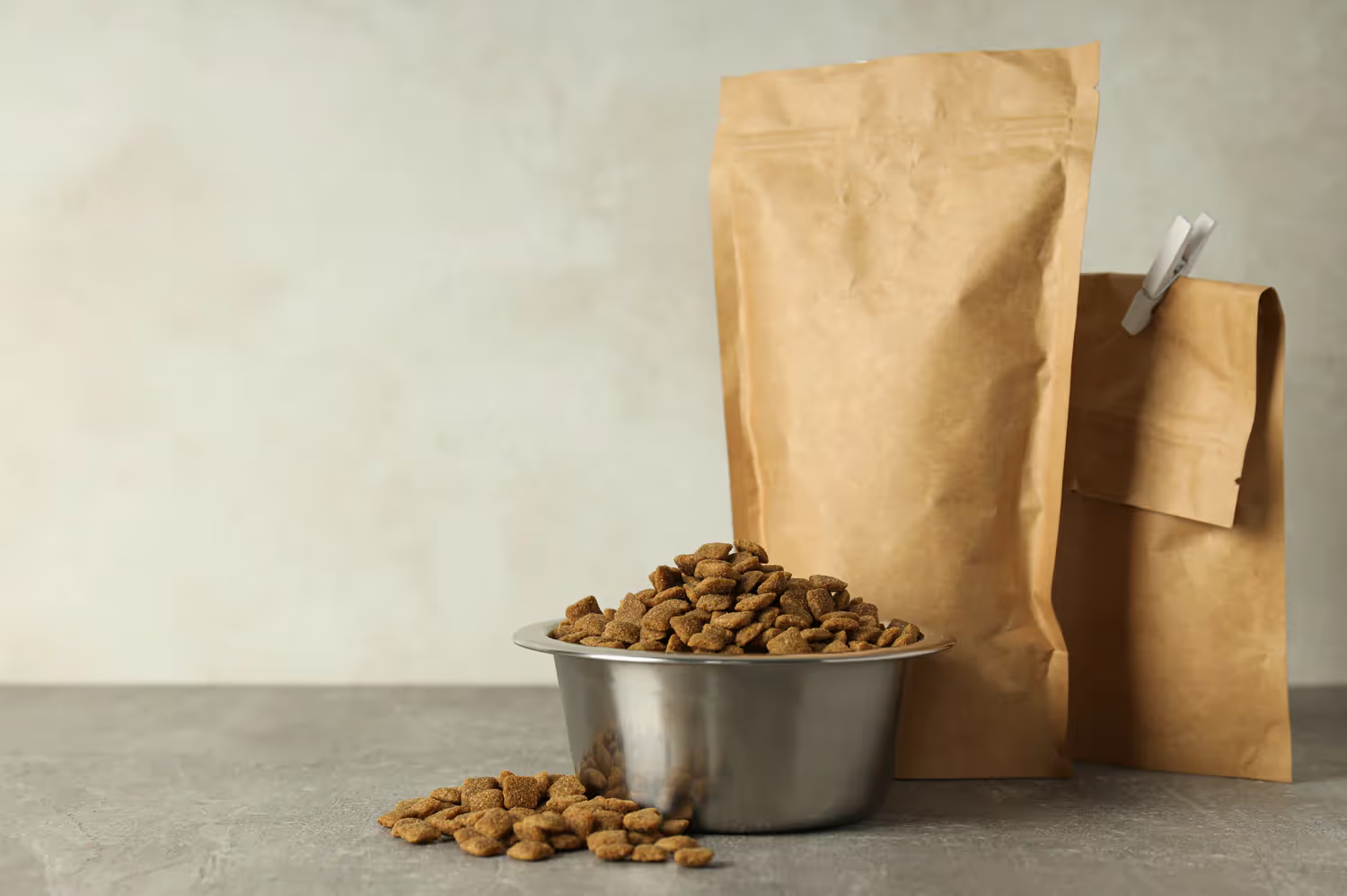
Fat Is Not the Problem - Misapplied Human Logic Is
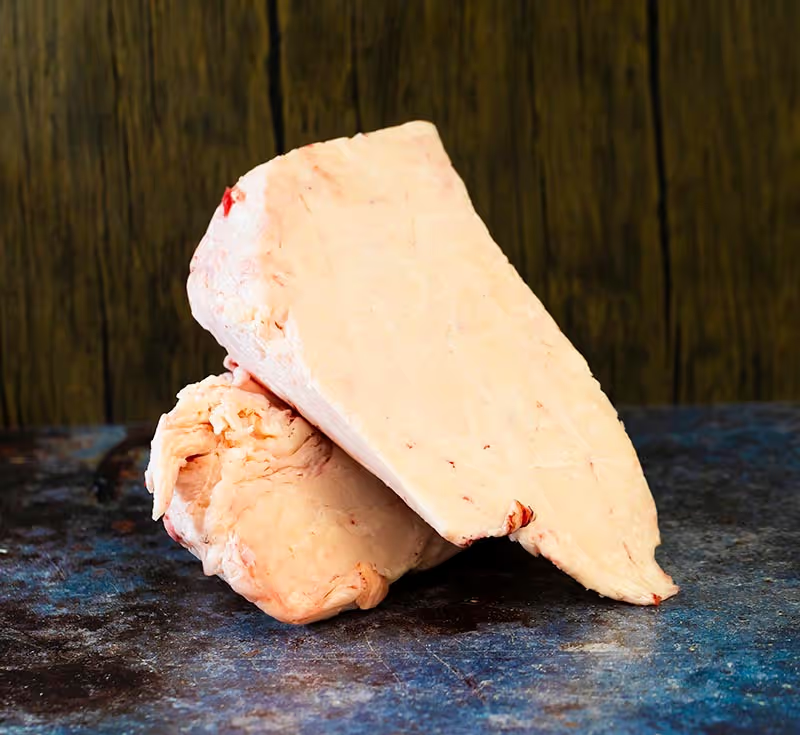

There is a persistent mistake in modern dog nutrition: We judge canine fat intake through a human lens.
Low-fat diets. Calorie anxiety. “Lean protein.”
These ideas dominate human wellness culture, then quietly spill into pet feeding—where they are often repeated with far less biological precision. WSAVA’s nutrition guidance explicitly warns that pet owners are surrounded by confusing and inaccurate nutrition information, and that feeding should be tailored to the individual animal rather than reduced to generic messaging.
I. The Faulty Comparison
Dogs are not small humans.
That is not a branding statement. It is a metabolic one.
A useful place to start is this: dogs are well adapted to using fat as fuel, and classic canine exercise nutrition literature notes that dogs have a greater capacity for fat oxidation than humans both at rest and during exercise. In endurance contexts, higher-fat diets have even been associated with improved stamina.
That does not mean every dog should be fed a high-fat diet.
It means human fat fear should not be copied and pasted onto dogs as if the species are nutritionally interchangeable.
II. Fat Is Not a Luxury Nutrient
Fat is not an optional extra in a dog’s diet.
The National Academies’ guide on canine nutrition states that dietary fats provide the most concentrated source of energy, supply essential fatty acids that cannot be synthesized in the body, and serve as carriers for fat-soluble vitamins. It also notes that fatty acids support cell structure and function.
That matters because anti-fat thinking often ignores what fat is actually doing.
It is not merely “adding calories.”
It is helping support:
cell membranes, vitamin transport, skin and coat integrity, neurologic function, and overall dietary energy delivery. Puppies fed ultra-low-fat diets can develop dry coat and skin lesions, according to the same National Academies guide.
So the baseline question is not whether fat belongs in a dog’s diet.
It does.
The better question is how much, what kind, and for which dog.
III. The Industry’s Favorite Shortcut: Calories Without Context
Calories are useful.
They are just not sufficient.
Fat contains more calories per gram than protein or carbohydrate, which is precisely why it is such an efficient way to deliver energy. Merck notes that commercial dog foods vary widely in fat content partly because fat content helps accommodate different demands such as maintenance, work, stress, growth, and lactation.
That is a more useful frame than moralizing fat.
Because calorie counts alone do not tell you:
how energy is being supplied, how digestible the diet is, or whether the food is appropriate for a sedentary dog, a growing puppy, or a working dog. WSAVA and AAHA both emphasize individualized nutritional assessment rather than one-size-fits-all rules.
Calories are a metric.
They are not, by themselves, a feeding philosophy.
IV. Quality Still Matters
Not all fat is nutritionally equal.
Merck highlights essential fatty acids such as linoleic acid and the omega-3 family, including ALA, EPA, and DHA, and notes that oily fish, krill oil, and algae oil are good dietary sources of EPA and DHA.
That distinction matters because the real conversation is not “fat versus no fat.”
It is whether the diet contains appropriate, well-preserved fats and whether those fats are delivered within a complete and balanced feeding system.
A dog eating a nutritionally sound diet with appropriate essential fatty acids is not in the same nutritional situation as a dog eating a poorly formulated, heavily degraded, or inconsistent fat source. Merck also notes that essential fatty acid deficiencies are rare in properly preserved complete and balanced diets, but when they do occur, the signs can include dry, scaly coat and reproductive or activity-related issues.
V. The Carbohydrate Confusion
One reason anti-fat thinking spreads so easily is that people assume the macronutrient hierarchy in dogs should mirror the one used in human diet discourse.
But Merck is direct on one key point: dietary carbohydrate is not considered essential for adult, nonreproducing dogs, because glucose can be produced in the body through gluconeogenesis.
That does not mean carbohydrates are inherently bad or that every dog should eat a very low-carbohydrate diet.
It does mean the simplistic idea that fat should be minimized while carbohydrate quietly takes over is not grounded in a biological requirement for adult dogs.
That is where a lot of public confusion begins:
human nutrition trends become canine “rules” without passing through species-specific physiology first.
VI. What the Evidence Actually Supports in Healthy Dogs
A useful addition here is restraint.
There is research in healthy adult dogs showing that increasing dietary fat improved apparent total tract digestibility while maintaining normal fecal characteristics and blood parameters within reference intervals. The authors explicitly noted that the dogs in that study remained healthy and that pancreatic lipase markers did not indicate adverse pancreatic effects under the controlled conditions studied.
That is important because it supports a narrow claim:
healthy dogs can utilize higher-fat diets under controlled conditions.
It does not justify a blanket claim that more fat is always better, or that any dog can tolerate any fat level. The same paper also notes that more work is needed in broader populations, including senior, diseased, overweight, and breed-diverse dogs.
That nuance improves the article. It does not weaken it.
VII. Where Low-Fat Diets Do Matter
This is the section that makes the piece credible.
Because there are cases where fat restriction is clinically appropriate.
Merck’s veterinary guidance on pancreatitis states that in dogs, a ration with less than 20 g fat per 1,000 kcal should be chosen, and that low-fat feeding is crucial for treatment success in affected dogs.
So the more defensible argument is this:
Low-fat diets have a real place in disease management.
They should not automatically become the standard for all healthy dogs.
That distinction is where good nutrition writing separates itself from internet absolutism.
VIII. Obesity Is a Feeding Management Problem, Not a Single-Nutrient Morality Tale
If you want this section to hold up, do not oversimplify it.
The more accurate framing is that dogs accumulate excess body fat when energy intake chronically exceeds need. Good nutritional management therefore requires ongoing assessment of body weight, activity, body condition score, and muscle condition score. AAHA’s weight-management guidance and WSAVA’s nutrition framework both support this individualized assessment model.
So instead of saying “fat makes dogs fat” or “fat never makes dogs fat,” the article should say something sharper:
A dog is not managed well by slogans. A dog is managed by portioning, monitoring, and adjustment.
That is both more credible and more forward-looking.
IX. The Better Question
The conversation has been misframed from the start.
Not:
Is fat good or bad?
But:
Is this level, type, and consistency of fat appropriate for this dog’s life stage, health status, activity level, and total energy intake?
That question is harder.
It is also the only one worth asking.
WSAVA’s nutrition guidance is built on that same principle: individualized plans, not generalized fear.
Closing
Fat is not the enemy in canine nutrition.
Confusion is.
The problem begins when human dietary anxiety is mistaken for canine biology—and when disease-specific advice is casually generalized to healthy dogs.
Dogs need fat.
Some dogs need less of it.
All dogs need context.
That is a stronger argument than “fat is good.”
It is also the one that survives scrutiny.